Ambient Soundscapes and Their Influence on Bet Sizing in Live Dealer Environments
Felix Reed · Aug 11, 2026

Ambient Soundscapes and Their Influence on Bet Sizing in Live Dealer Environments
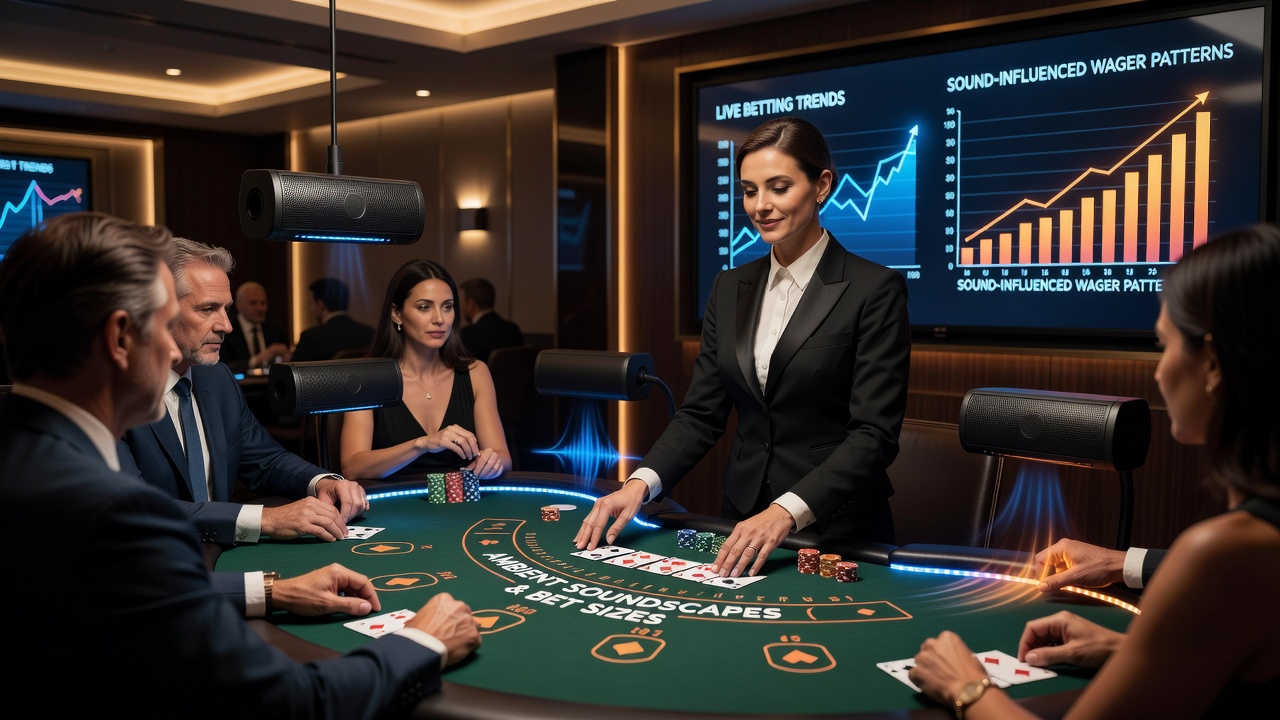
Live dealer platforms integrate layered audio tracks that include dealer voices, subtle music beds, and ambient crowd simulations, and researchers have documented measurable shifts in average wager amounts when these elements change in volume or tempo. Data from multiple platform operators shows that players adjust stakes upward during segments where background layers increase in intensity, while lower audio density often correlates with more conservative betting patterns across blackjack and roulette streams.
Audio Components in Live Dealer Studios
Studios maintain consistent acoustic profiles through dedicated mixing consoles that balance real-time dealer commentary with pre-recorded environmental cues, and operators adjust these mixes based on session analytics collected throughout each shift. One European gaming technology provider reported in 2025 that altering the frequency range of crowd noise tracks produced a 12 percent variation in median bet sizes within the same player cohort over a four-week test period. Those adjustments occurred without changes to game rules or payout structures, which isolates the audio variable as the primary factor in the observed behavior.
Sound engineers apply dynamic compression to prevent sudden spikes from startling participants, yet they leave enough headroom for tension-building swells during critical moments such as final card reveals. Platforms operating in August 2026 introduced real-time adaptive mixing that responds to aggregate player activity rather than fixed schedules, allowing the audio environment to evolve alongside betting trends detected in the preceding minutes.
Research Findings on Audio and Risk Behavior
Academic investigations into auditory priming have examined how tempo and timbre affect decision speed in chance-based tasks, and several studies published between 2024 and 2026 applied those principles directly to simulated live dealer interfaces. Findings indicate that tempos between 120 and 140 beats per minute coincide with shorter decision intervals and higher average stakes, whereas slower tempos extend deliberation time and reduce stake escalation. Observers note that these patterns hold across different demographic segments when other variables remain constant.
One research team tracked eye movement and click latency alongside audio conditions, revealing that participants exposed to layered ambient tracks maintained visual focus on bet placement controls for longer durations before committing. The same cohort placed larger wagers on subsequent rounds when the audio track maintained steady rhythmic pulses without abrupt silences. Such data aligns with broader psychological literature on auditory entrainment and its effect on perceived time pressure during sequential choices.
Platform Implementation Patterns
Operators segment audio profiles by game type, applying brighter tonal palettes to speed-focused variants while reserving deeper bass frequencies for table games that reward longer consideration. Analytics dashboards used by studio managers display correlations between audio layer activation and stake distribution histograms updated at five-minute intervals. In August 2026 several major platforms synchronized these dashboards with player segmentation tools, enabling targeted audio variations for different loyalty tiers without altering visual elements.
Regulatory filings in multiple jurisdictions now require disclosure of any automated systems that modify sensory inputs during active sessions, and compliance teams review audio logs alongside bet data to confirm that adjustments remain within approved parameters. Industry associations have begun publishing voluntary guidelines that encourage transparency around audio influence testing, though adoption rates vary by region.
Player Response Data Across Sessions
Session-level telemetry collected from thousands of concurrent streams shows that transitions from low to moderate ambient volume produce the most consistent upward movement in bet sizes, while transitions involving added musical elements generate more variable responses. Players who remain in a single session for over forty-five minutes demonstrate adaptation, with initial stake increases tapering as familiarity with the current soundscape develops. Operators therefore schedule subtle audio refreshes at roughly thirty-minute intervals to maintain engagement metrics.
Cross-platform comparisons conducted by independent analytics firms indicate that environments featuring spatial audio rendering produce slightly larger average bet adjustments than mono or stereo mixes, although the difference narrows when players use mobile devices with smaller speakers. These patterns appear in both recreational and higher-volume player groups, suggesting the effect operates independently of overall bankroll size.
Conclusion
Technical refinements in live dealer audio continue to evolve alongside data collection capabilities, and ongoing measurements track how specific soundscape parameters interact with betting behavior across extended timeframes. Industry reports scheduled for release later in 2026 are expected to provide additional granularity on regional differences and device-specific responses.