How Session Timers and Spending Caps Sync in App-Based Wagering Platforms
Leon Klein · Jun 2, 2026

How Session Timers and Spending Caps Sync in App-Based Wagering Platforms
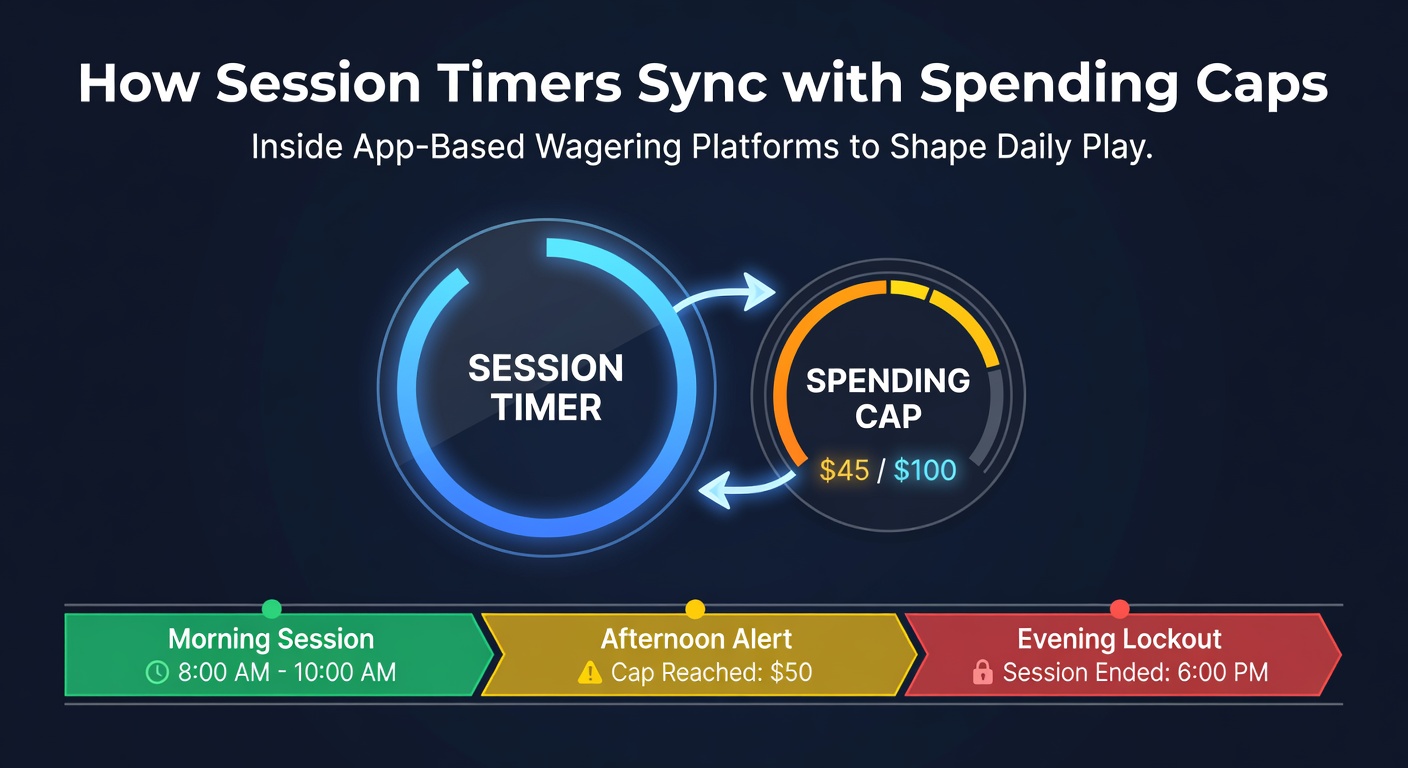
App-based wagering platforms track user activity through synchronized systems that combine session timers with spending caps, and these mechanisms work together to establish enforceable daily play limits. Developers integrate time-based monitoring with financial thresholds so that when either parameter reaches its preset boundary, the platform restricts further activity until the next cycle resets. This coordination occurs through backend algorithms that pull data from account ledgers and device clocks simultaneously, creating a unified control layer rather than separate standalone features.
Core Mechanics of Session Timers
Session timers activate the moment a user logs into the wagering application and continue counting until the player exits or reaches a configured duration. These timers operate on real-time clocks that account for pauses during gameplay, yet they exclude periods when the app runs in the background without active betting. Platforms record cumulative time across multiple short logins within a calendar day, which prevents users from resetting the clock simply by closing and reopening the application. Data from several North American operators shows that average session lengths hover between 25 and 45 minutes before automated prompts appear, and these prompts often reference both remaining time and remaining spend allowance in a single notification.
Spending Caps and Their Integration Points
Spending caps function as hard monetary ceilings that the platform enforces by monitoring deposits, wagers placed, and net losses within a 24-hour window. When a user sets a daily spend limit, the system logs every transaction against that figure and cross-references it with the ongoing session timer. Synchronization happens at the server level where a single compliance engine evaluates both variables before authorizing each new bet, and this prevents scenarios where a player could exhaust funds quickly within a very short session or stretch small wagers across an excessively long period. Integration also extends to bonus credits and promotional funds, which count toward the same cap to maintain consistency across all account balances.
Daily Limit Formation Through Combined Rules
Daily play limits emerge when the platform merges timer data with spending data into one effective threshold. For instance, an operator might configure a rule that reduces the remaining spend allowance proportionally as session time increases, or it might freeze new wagers once either the time or money limit is hit. This combined approach shapes user behavior by interrupting extended play before financial thresholds alone would trigger a stop. Observers note that platforms in regulated markets such as New Jersey and Ontario have documented fewer instances of rapid deposit sequences since implementing these synced controls, because the dual monitoring catches patterns that single-metric systems previously missed.
Technical Synchronization Process
The synchronization relies on application programming interfaces that connect the timer module directly to the financial ledger in real time. Every few seconds the app transmits a heartbeat signal containing current session duration and cumulative spend, and the server responds with updated authorization status. If the combined values approach any configured boundary, the response includes a soft warning, followed by a hard block once the limit is crossed. This process runs continuously even during live betting events, and it adjusts dynamically when users add funds or extend sessions through explicit permission requests. Platforms that adopted these linked systems in early 2026 reported smoother compliance audits because the unified logs provide clearer audit trails than fragmented time and money records.
Regional Regulatory Context in Mid-2026
By June 2026 several jurisdictions had updated their technical standards to require explicit synchronization between session timers and spending caps. The New Jersey Division of Gaming Enforcement issued updated guidelines that mandate platforms demonstrate both metrics feed into a single daily limit calculation. Meanwhile the Australian Communications and Media Authority referenced similar requirements in its ongoing review of digital wagering tools, and researchers at the University of Sydney documented how synced systems reduced the frequency of users exceeding self-set daily budgets by measurable margins across sampled accounts. These regulatory shifts encouraged operators to redesign their mobile applications so that the two controls appear together in user settings and in real-time dashboards.
Practical Examples from Platform Deployments
One major operator introduced a feature where a 60-minute session timer automatically lowers the remaining daily spend cap by 20 percent after 45 minutes of continuous play. Another platform links progressive alerts that intensify as both time and money approach their ceilings simultaneously, giving users multiple opportunities to pause before a full restriction activates. These implementations rely on the same underlying data streams yet present the information differently depending on the target audience, with some apps favoring visual progress bars while others use text summaries that update after each wager. Testing conducted by independent labs confirmed that such linked alerts reach users earlier than either timer or cap warnings alone, thereby shaping daily play limits more effectively across varied user segments.
Conclusion
Session timers and spending caps inside app-based wagering platforms operate as interconnected controls that together define daily play limits through continuous data exchange and unified decision rules. As operators refine these systems and regulators codify synchronization requirements, the resulting frameworks provide clearer boundaries that reflect both temporal and financial dimensions of play. The approach continues to evolve with updates to mobile operating systems and changes in jurisdictional standards expected through the remainder of 2026.