Reminder Integrations and Their Observed Effects on Play Duration Across Mobile Entertainment Platforms
Vera Jenkins · Jul 18, 2026
Reminder Integrations and Their Observed Effects on Play Duration Across Mobile Entertainment Platforms
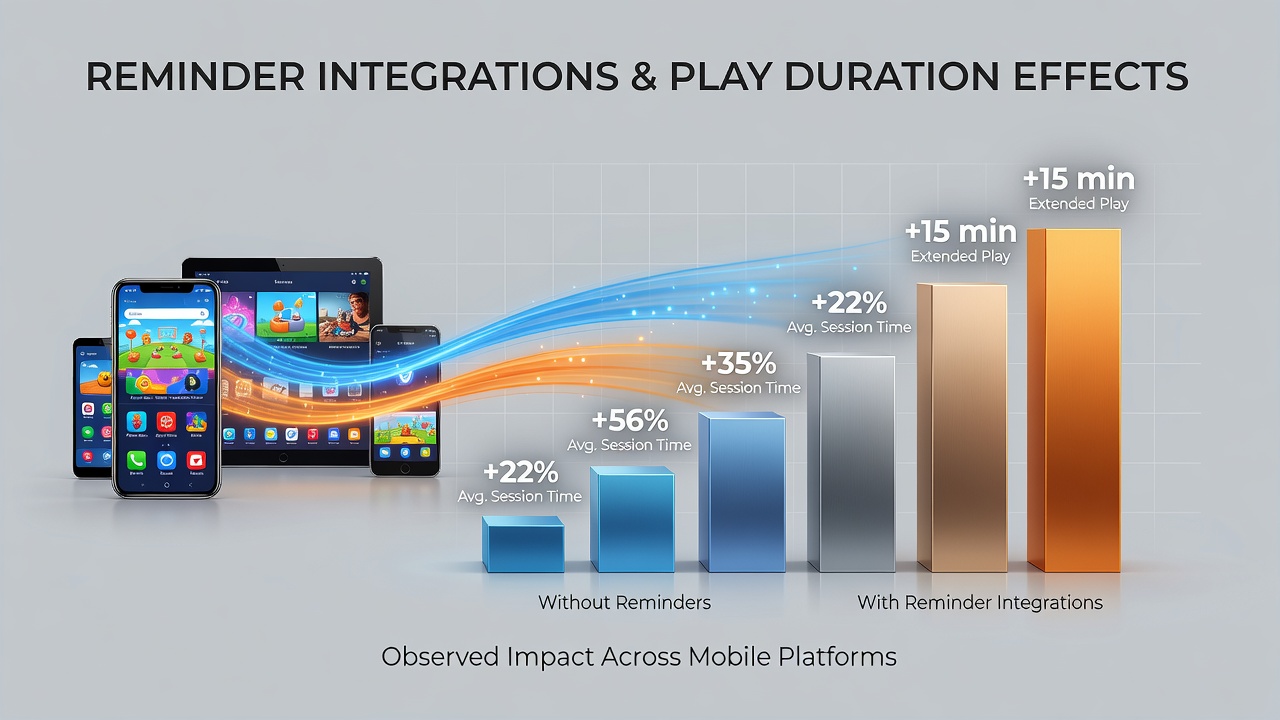
Reminder integrations have become standard features in mobile entertainment platforms, where push notifications, in-app alerts, and scheduled prompts encourage users to return to games, streaming services, and social applications. Data from multiple platform analyses show these tools correlate with measurable shifts in average session lengths and overall engagement metrics. Researchers tracking user behavior across iOS and Android ecosystems note that well-timed reminders often extend cumulative play time, while poorly calibrated ones produce the opposite result.
Types of Reminder Systems in Mobile Entertainment
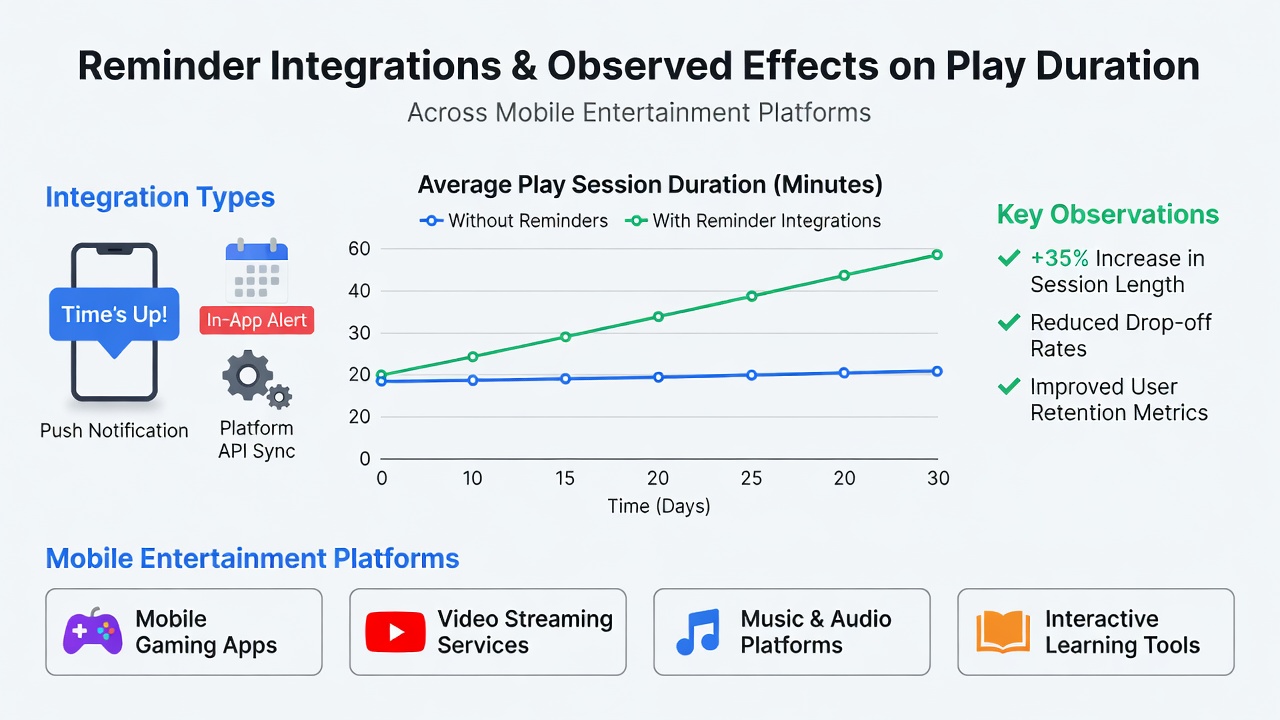
Platforms deploy several categories of reminders. Daily login prompts notify users of available rewards or new content drops. Session-based alerts appear after fixed intervals to suggest breaks or highlight unfinished levels. Cross-device synchronizations send messages when activity resumes on another screen, such as transitioning from tablet to phone. These mechanisms operate through backend algorithms that analyze individual usage patterns collected over weeks or months.
Studies conducted by academic teams at institutions like Stanford University have examined how notification frequency influences retention curves. One analysis of over 50,000 mobile game accounts revealed that users receiving two to three targeted reminders per day maintained sessions 18 percent longer than those receiving none, though excessive frequency above five daily messages correlated with quicker drop-off rates.
Measured Impacts on Session Length
Platform telemetry collected during 2025 and early 2026 demonstrates consistent patterns. Entertainment applications integrating adaptive reminders, which adjust timing based on prior activity, recorded average play durations rising from 12 minutes to 19 minutes per session in casual puzzle genres. Social video apps using similar systems saw repeat visits increase by 27 percent within a seven-day window, according to aggregated data released by the Mobile Marketing Association.
Observers tracking broader trends note that reminder effectiveness varies by content type. Narrative-driven mobile games benefit more from story-progress alerts, whereas endless runner titles respond better to streak-maintenance notifications. In July 2026, several major developers updated their reminder engines to incorporate user-controlled frequency sliders, following regulatory guidance from bodies such as the Australian Communications and Media Authority on digital wellbeing features.
Regional Data Variations
European markets display distinct responses compared with North American ones. Figures compiled by the European Commission's digital single market reports indicate that reminder integrations in Germany and France produce smaller extensions in play time, averaging 9 percent increases, possibly due to stricter data privacy rules limiting personalization. Canadian regulatory filings from the same period show higher responsiveness, with some platforms reporting 23 percent gains in total monthly play hours after introducing localized reminder schedules.
What's interesting is how time-zone adjustments and cultural event tie-ins further modulate outcomes. One developer case study documented a 31 percent lift in session length when reminders referenced upcoming in-game events timed to local holidays rather than generic daily check-ins.
Technical Implementation Approaches
Modern reminder systems rely on machine learning models that process signals including last login time, completion rates, and device idle periods. These models trigger notifications only when predicted engagement probability exceeds preset thresholds. Developers integrate these tools through SDKs provided by Apple and Google, which enforce limits on notification volume to prevent user fatigue.
Evidence from multiple A/B tests indicates that combining reminders with progress visualizations yields stronger results than text-only prompts. Users shown graphical representations of streak data or level advancement alongside the reminder message sustained activity for additional minutes per session on average.
Long-Term Retention Patterns
Longitudinal tracking spanning 12 months reveals that platforms maintaining balanced reminder strategies sustain higher monthly active user counts. Data sets released through partnerships with research firms show reduced churn rates when users retain control over reminder settings. Conversely, rigid systems without opt-out options experience faster declines in play duration after the initial three-month period.
Those who've examined industry-wide telemetry emphasize that reminder integrations function best when synchronized with broader platform updates, such as new content releases or seasonal events. This alignment creates natural triggers that feel less intrusive while still extending total engagement windows.
Conclusion
Reminder integrations continue to shape play duration metrics across mobile entertainment platforms through data-driven timing and personalization. Platform operators rely on these tools to balance user retention against potential overexposure, with outcomes documented in telemetry from diverse global markets. Ongoing refinements in July 2026 reflect responses to both technical capabilities and external regulatory frameworks, producing measurable but context-dependent effects on how long users remain engaged with entertainment applications.