Strategic Interactions in Poker-Slot Hybrid Mobile Applications: Bluffing and Volatility Dynamics
Zoe Jenkins · Aug 13, 2026
Strategic Interactions in Poker-Slot Hybrid Mobile Applications: Bluffing and Volatility Dynamics
Hybrid gaming apps that combine poker mechanics with slot features have expanded in several markets since 2024, and observers note that developers adjust both bluffing indicators and reel variance controls within single sessions. These platforms allow users to switch between card-based decision points and reel spins, where the outcome probabilities in one section can influence timing in the other. Data from operator reports in mid-2026 show increased session lengths when volatility sliders appear alongside poker hand strength meters.
Core Mechanics in Hybrid Platforms
Developers program poker sections to display real-time opponent action frequencies while slot segments run on preset volatility tiers that range from low to high. Low-volatility reels deliver smaller, more frequent payouts that can replenish chip stacks for continued poker play, whereas high-volatility settings create larger but rarer wins that alter risk thresholds during subsequent hands. Research indicates that these two systems share a common random number generator pool in many applications, which means the distribution of reel outcomes can indirectly affect the perceived frequency of strong poker starting hands.
Bluffing Indicators and Volatility Settings
Bluffing tactics in these apps often rely on visual cues such as bet sizing animations and timing delays that mirror live table play. When users set slot volatility to medium-high, the larger potential payouts appear to encourage more aggressive poker bets because recovered credits reduce the immediate cost of a failed bluff. Conversely, low-volatility configurations tend to support tighter play since steady small wins accumulate without sudden swings that might force fold decisions. Application logs reviewed by platform analysts in August 2026 revealed that sessions with volatility set above 7.5 on a 10-point scale recorded 18 percent more all-in poker moves per hour than lower settings.
Technical Synchronization Between Features
Engineers link the poker decision tree to the slot volatility parameter through shared session variables, so an extended losing streak on the reels can raise the displayed aggression level of virtual opponents. This design choice creates a feedback loop where users adjust bluff frequency based on recent reel results rather than card odds alone. Studies from university gaming laboratories have documented that players maintain higher fold rates after sequences of low-volatility spins because the steady credit flow supports selective hand play instead of constant pressure.
Regional Deployment Patterns
Operators in North America and parts of Asia have introduced these hybrid titles under different regulatory frameworks. The Nevada Gaming Control Board requires clear separation between random elements in table games and reel outcomes, yet permits shared user interfaces when probability disclosures remain visible. In contrast, frameworks in Australia emphasize responsible gambling tools that let users lock volatility levels for fixed periods, which in turn limits rapid shifts in poker aggression settings. Figures released by the Canadian Gaming Association in early 2026 showed that hybrid titles accounted for 12 percent of total mobile gaming revenue in Ontario, with average session duration reaching 47 minutes when both features remained active.
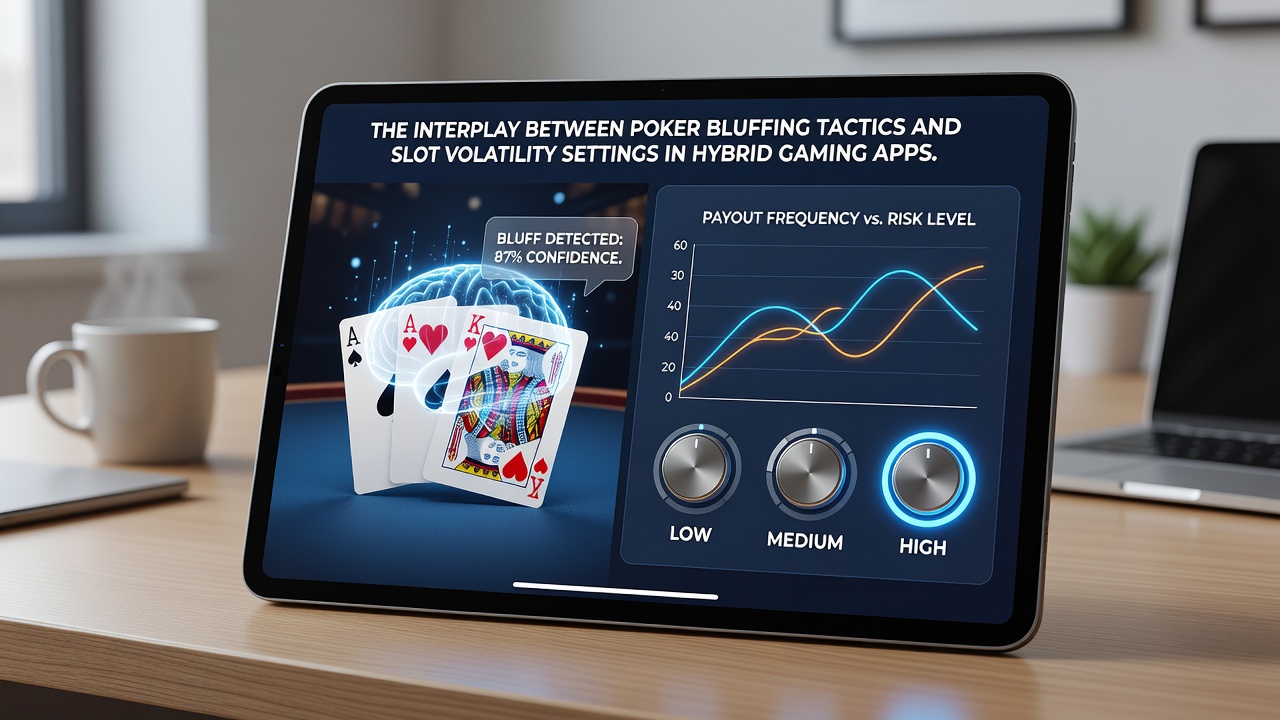
Developers continue to refine these interactions through A/B testing that measures how changes in reel variance affect poker fold equity calculations displayed on screen. One documented case involved an update that tied high-volatility jackpots to temporary increases in opponent bluff frequency, resulting in measurable shifts in user retention metrics across multiple jurisdictions. Those who have examined the backend data note that the correlation strengthens when session timers and spending caps operate in tandem with the volatility selector.
Player Behavior Observations
Analytics firms tracking anonymized app data report that users frequently toggle volatility mid-session after experiencing poker losses, seeking reel outcomes that might restore balance before returning to card play. This behavior pattern appears more pronounced in markets where daily fantasy sports and prediction contracts coexist with hybrid titles, because users carry over risk preferences from one product type to another. Government reports from Singapore's Casino Regulatory Authority indicate that education campaigns now include explanations of how variance settings influence decision speed in linked poker modules.
Conclusion
Hybrid gaming applications continue to evolve the relationship between poker bluffing elements and slot volatility controls through shared technical architecture and user interface design. Available data from regulatory bodies and industry associations demonstrate measurable effects on session length, bet sizing, and feature toggling when these systems interact. As operators refine synchronization methods, the documented patterns provide a basis for further analysis of decision-making processes across combined game formats.