Tiered Loyalty Programs Influencing User Behaviors in Mobile Gambling Applications
Finley Lorenz · Aug 20, 2026
Tiered Loyalty Programs Influencing User Behaviors in Mobile Gambling Applications
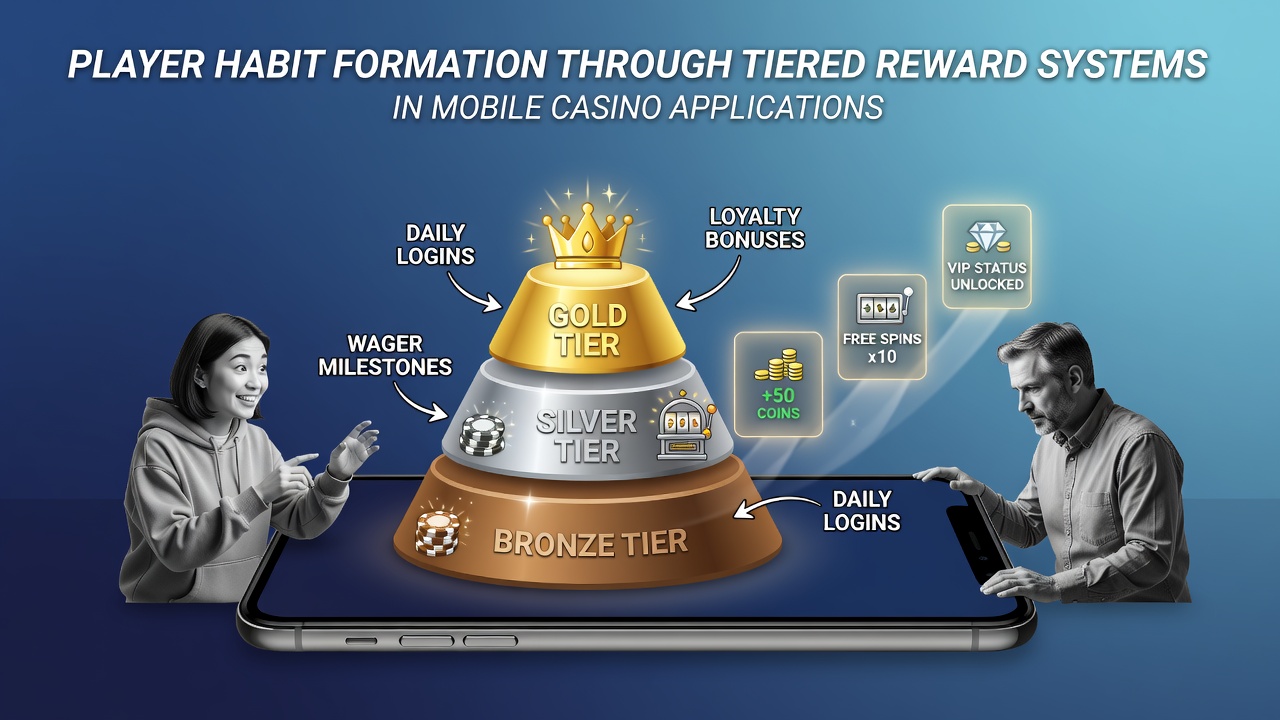
Mobile casino applications employ tiered reward systems that assign players to progressive levels based on accumulated activity metrics such as wagers placed and time spent in sessions, with each tier unlocking escalating benefits including cashback percentages, free spin allocations, and personalized promotions. These structures organize player progression through categories like entry-level bronze, intermediate silver, advanced gold, and elite platinum, where movement between tiers depends on meeting defined thresholds within specified periods. Data from industry tracking platforms indicates that such layered incentives correlate with extended session durations across multiple applications available in regulated markets.
Core Components of Tiered Structures
Each tier operates through point accumulation formulas where every dollar wagered converts to a set number of loyalty points, often at rates between one and five points per dollar depending on the game category, while bonus multipliers apply during promotional windows. Players advance when their point totals hit predetermined milestones, and retention of status requires ongoing activity to avoid demotion at the end of qualification cycles. Notifications push to devices when users near the next threshold, and visual progress bars display remaining requirements within the app dashboard. According to reports compiled by the American Gaming Association, these mechanics appear across numerous platforms operating under state licenses in the United States during mid-2026.
Behavioral Patterns Linked to Progression Mechanics
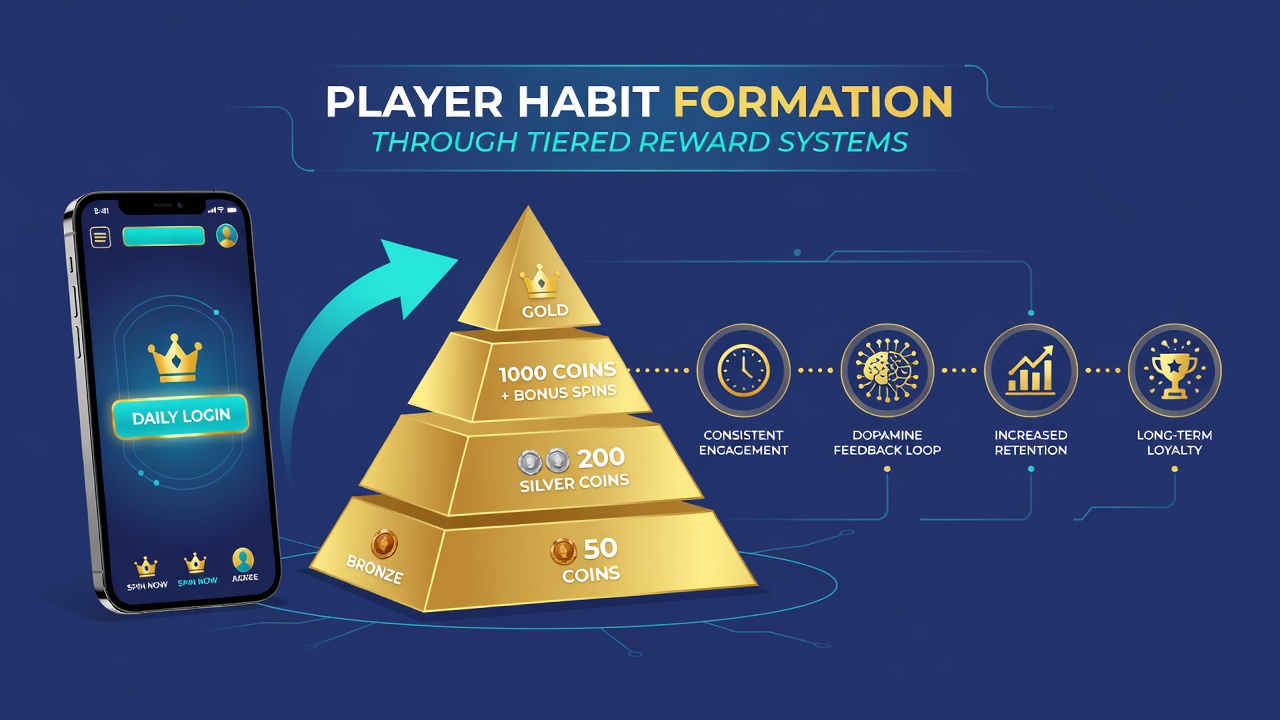
Researchers examining app telemetry have documented increases in login frequency among users who receive incremental rewards upon tier advancement, with patterns showing repeated daily engagement to maintain streaks or complete limited-time challenges tied to higher levels. Variable reward schedules, where the size or type of benefit fluctuates unpredictably, align with established reinforcement principles that encourage repeated actions, while fixed benefits at tier boundaries provide clear milestones that users track over weeks or months. Studies released in academic journals on digital gaming environments note that players in mid-tier categories often exhibit the highest consistency in return rates compared to those at entry or top levels. In August 2026 several platforms introduced adjustments to point expiration rules, resulting in observable shifts in how users distributed their activity across different game types to protect accumulated status.
Retention Metrics Across Tier Levels
Industry analyses of aggregated user data reveal that retention rates climb as players move upward through tiers, with platinum-level participants showing session return rates exceeding those of bronze users by substantial margins in tracked cohorts. A report from the Canadian Gaming Association highlighted correlations between tiered benefit access and reduced churn in provinces with legalized online offerings, noting that cashback mechanisms at higher tiers offset losses and sustain participation. Developers implement these systems using algorithms that adjust reward frequency based on individual play velocity, ensuring that progression feels attainable yet requires sustained effort. External research from institutions studying behavioral economics in gambling contexts has quantified how personalized offers scaled to tier status increase the probability of consecutive active days within apps.
Implementation Examples in Current Platforms
Applications licensed in multiple U.S. states integrate tier systems with real-time tracking that updates point balances immediately after each spin or hand, allowing users to monitor advancement without leaving the main interface. One widely adopted model ties tier benefits to specific game categories, awarding extra points for table games versus slots to steer volume toward higher-margin offerings while still providing broad accessibility. Observers note that cross-promotional events, such as tier-exclusive tournaments held during summer months, generate spikes in engagement that carry over into regular play patterns. Data compiled through 2026 indicates these features remain common in jurisdictions including New Jersey and Pennsylvania, where regulatory oversight requires transparency in how points convert to tangible rewards.
Regulatory Context and Oversight Developments
State gaming commissions and international bodies have examined tiered systems for compliance with responsible gaming standards, requiring clear disclosure of qualification criteria and expiration policies to prevent misleading representations. In regions with established frameworks, operators submit periodic reports detailing how reward algorithms function and their observed effects on player time and spend distributions. A policy brief from the Malta Gaming Authority outlined expectations for audit trails that verify fair distribution of tier benefits across user bases. These measures aim to balance commercial objectives with consumer protections while platforms continue to refine algorithms in response to evolving market data.
Conclusion
Tiered reward systems in mobile casino applications structure player progression through defined levels that deliver graduated incentives, and available evidence connects these designs to measurable patterns in login frequency and session length. Retention statistics segmented by tier demonstrate higher continuity among advanced users, while regulatory requirements emphasize transparency in mechanics and outcomes. As platforms adapt these frameworks through 2026 and beyond, ongoing data collection from licensed operators provides the factual basis for understanding their role in shaping engagement behaviors across digital gambling environments.