Tracing Player Habit Loops in Cross-Platform Reward Ecosystems
Finley Lorenz · Aug 22, 2026
Tracing Player Habit Loops in Cross-Platform Reward Ecosystems
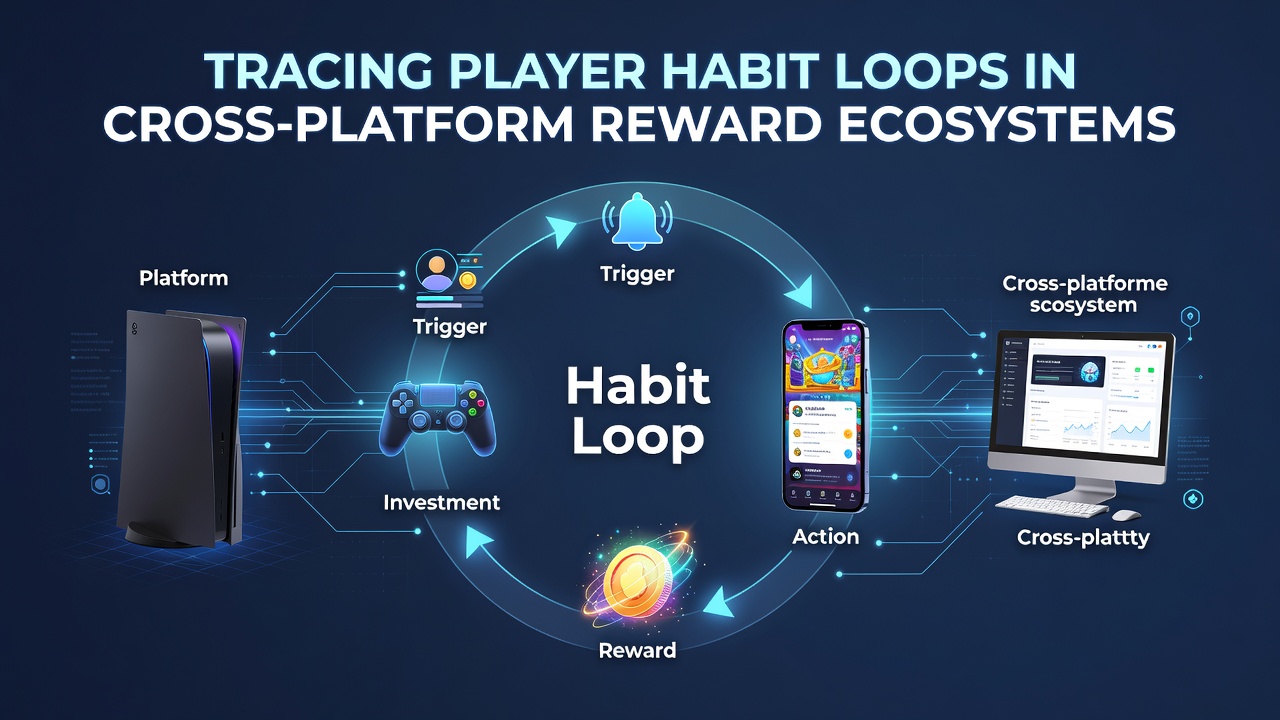
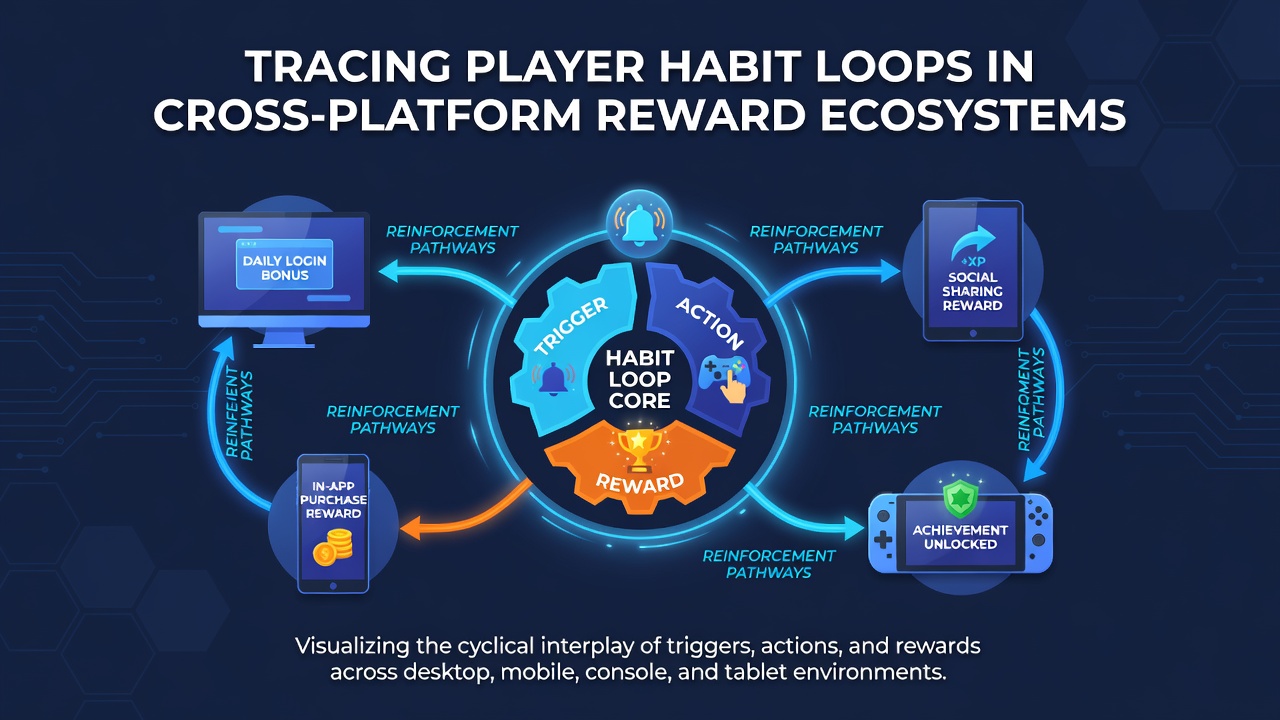
Habit loops form the core mechanism behind sustained player engagement across digital platforms where rewards sync between mobile apps, consoles, and web interfaces. Researchers have mapped these loops as sequences that begin with a trigger such as a notification or progress bar, move through an action like completing a daily challenge, and end with a reward such as virtual currency or badges that carry over to other devices.
Core Components of Habit Formation in Gaming Systems
Psychologists and data analysts have documented how these loops operate when players switch between environments. A trigger appears on one device, the player performs the required task on another, and the reward registers in a shared database that updates all linked accounts simultaneously. Studies from academic institutions show that seamless synchronization increases the frequency of repeated actions because the reward arrives without delay regardless of the platform used.
Cross-platform ecosystems rely on unified player profiles that track metrics including login streaks, task completion rates, and reward redemption patterns. When a player earns points on a mobile session, those points become available on a console within seconds through cloud-based ledgers. This continuity strengthens the routine portion of the loop and reduces friction that might otherwise break the cycle.
Data Patterns Observed Across Devices
Analytics platforms collect anonymized information from millions of accounts to identify which triggers produce the highest conversion to actions. Figures released in August 2026 from industry reports indicated that notification-based triggers generated 47 percent more task completions than static in-app prompts across tested networks. Observers note that reward types also influence loop strength, with experiential rewards such as exclusive avatars outperforming simple currency in long-term retention measurements.
One research project examined users who maintained accounts on three separate platforms over six months. The team found that players who received consistent reward feedback across all devices completed an average of 2.3 times more daily tasks than those limited to single-platform access. These results highlight how ecosystem integration directly affects behavioral repetition.
Technical Implementation and Tracking Methods
Developers implement habit loop tracing through event logging systems that record each trigger, action, and reward event with timestamps and device identifiers. Machine learning models then process these logs to predict when a loop might weaken or break. When a player stops responding to a particular trigger, the system adjusts by introducing new reward variations or altering notification timing on connected platforms.
European regulators and trade groups have examined these practices through frameworks established by the Interactive Software Federation of Europe, which tracks how reward mechanics affect user behavior in digital entertainment products. Similar oversight appears in reports from North American research bodies that focus on data transparency in player tracking systems.
Integration challenges arise when platforms use different reward currencies or progression systems. Teams address these issues by creating conversion tables that translate value between ecosystems, ensuring a player who earns 500 points on mobile receives an equivalent 50 tokens on console without losing perceived progress.
Regional Variations in Reward Ecosystem Design
Design choices differ by region because local regulations and player preferences shape how rewards display and transfer. Australian industry analyses have shown higher adoption of social rewards such as leaderboards that sync across devices, whereas North American systems emphasize individual milestone badges. These differences affect loop durability, with social features often producing longer engagement windows according to comparative datasets.
Academic papers published through university research centers continue to explore how cross-platform consistency influences habit strength. One project tracked cohorts across multiple continents and confirmed that unified reward ledgers correlated with steadier daily activity rates regardless of geographic location.
Conclusion
Tracing player habit loops reveals consistent patterns in how triggers, actions, and rewards interact within connected digital environments. Data collection methods and synchronization technologies allow precise measurement of these cycles, while regional adaptations demonstrate flexibility in implementation. Continued analysis from diverse regulatory and academic sources provides ongoing insight into the mechanics that sustain engagement across platforms.